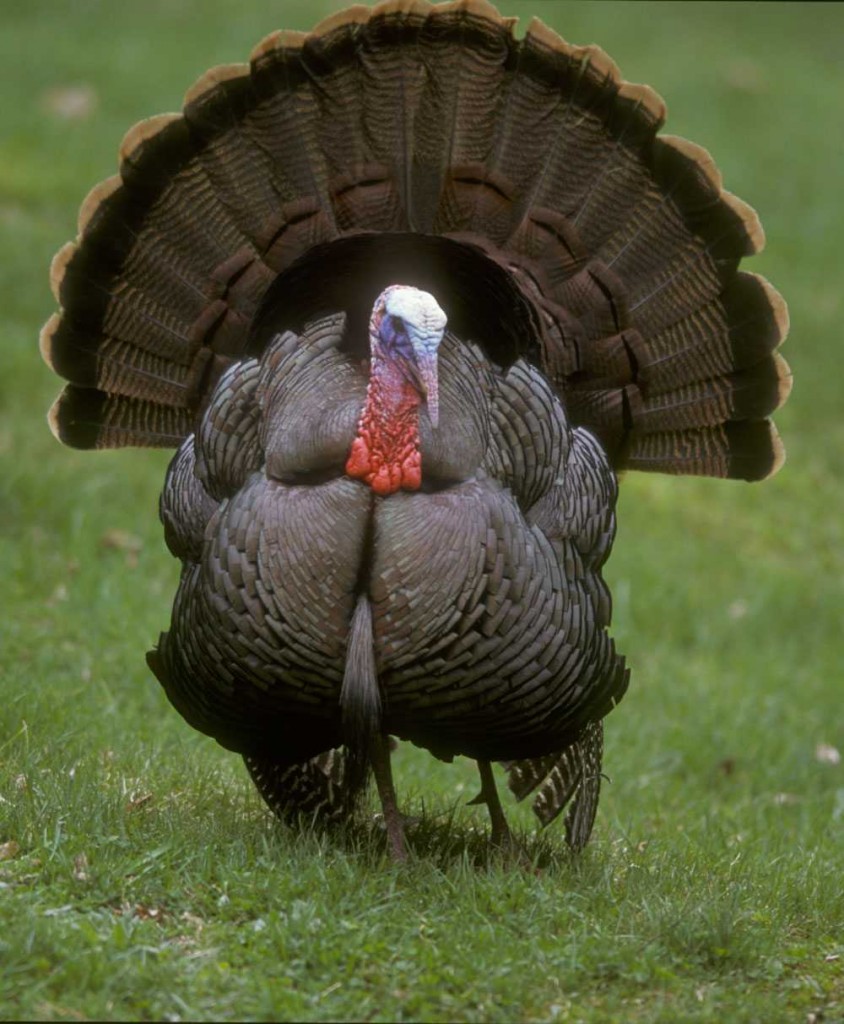
 Matthew Jamieson produces Sunforest organic turkeys on the red soil plateau at Bangalow above Byron Bay in northern New South Wales. He has one full-time employee. There are usually 1500 birds on the farm and they are slaughtered and then frozen at 13 to 20 weeks of age at a certified abattoir at nearby Alstonville. The poultry is then sold to a variety of shops in Sydney and Queensland that market organic meat and poultry. Some poultry is sold to people who send their orders directly to the farm and Matthew also attends local growers’ markets.
Day old turkey chicks are purchased, usually in batches of 300 to 500 chicks but sometimes in a relatively small batch of 150 chicks. The chicks are kept in a brood room for three weeks. The young chicks need warmth and the initial brood room temperature of 370C is gradually brought down to 250C by opening the windows wider and for longer periods each day until the chicks are ready for normal outdoor temperatures. Gas and electricity provide the warmth. It is essential to keep the door of the brood room closed, not only to maintain the warmth but also to keep predator birds out.
The brood room is thoroughly cleaned and prepared for each new batch. Each batch has litter of clean dry sawdust or wood shavings (editors note – it is essential that sawdust and shavings are from non-treated timber) and is provided with organically certified feed starter mix especially prepared for turkey chicks. These chicks are on organic feed from their first day. Fresh clean water is always available. Each person entering the brood room must walk through a quarantine footbath. Visitors from other poultry farms are not allowed in and other visitors are not encouraged.
Three week old chicks. Once they are out of the brood room, the three week old chicks graze in a large netted paddock until they are big enough to avoid most attacks by predator birds. The netted paddock has shelter sheds for the young birds to access in very hot or very wet weather. The netting was originally erected to protect a banana crop but the young turkeys enjoyed (and destroyed) the banana plants so much that the paddock is now dedicated to the turkeys. When the chicks are first introduced to this paddock a Mareema dog on a long lead is put in with them as a guard because hawks can find a way in through any small tear in the netting.
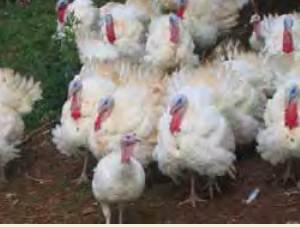
Adult birds in paddock.
Adult birds. As the turkeys approach adult size they move into a larger (not netted) paddock and they graze on the pasture of broadleaf paspalum and also have access to an organic poultry ration and whole grain in self feeders. They spend about eight weeks in this free range paddock; they sleep in the paddock. In summer the conifers in the paddock provide shade for the birds and in very wet weather they may need a temporary awning or shelter for protection. If the season is particularly wet, turkey production is put on hold.
The poultry ration does not contain methianine although it is permitted by the Certifier. Fish meal and organic soya bean meal are used as protein supplements.
Weeds such as cider grass or paddy’s lucerne that are not palatable to the turkeys, are mulched and used as ground cover and this encourages the growth of the paspalum.
Wind protection. Banda grass is a windbreak from the strong southerly winds.
Predators. A 10 wire electric fence keeps foxes out and usually keeps the Mareema guard dog in with the grazing birds; one dog was an exception because it preferred to jump the electric fence and spend time with the family in the house, rather than do its job and protect the turkeys from predators. The best dog that Matthew had for protecting the turkeys was a cross between a Mareema and an Okshanka. Unfortunately over the years, guard dogs have been killed by ticks, snakes and a few unknown causes.
Other farm animals. Matthew has a few sheep running with the turkeys because he trains the guard dog to become accustomed to sheep so that the dog doesn’t readily attack the neighbour’s sheep. He also has a few ducks with the turkeys. The duck eggs are incubated for 28 days before the ducklings are introduced to the brood room. However, the ducks are too easily prey for sea eagles and so not a reasonable commercial product. A few geese run with the turkeys and they have proved to be even better than the dog at protecting turkeys against predator birds.
There hasn’t been any disease problem with the poultry, possibly because the birds are very healthy and fed well.
Author.
Matthew Jamieson.


