 Deciding how much land is required to provide for sustainable grazing enterprises depends on productive potential or carrying capacity. Land values may not accurately reflect productivity (especially in areas such as the Hunter). Productivity also varies considerably across a property, so an understanding of the key environmental and resource features of a locality (or specific site) is essential. Soil phosphate levels are the primary indicator of productivity. More generic and less accurate alternatives are Agricultural Suitability Classification and pasture types.
Follow the steps set out below to calculate the average carrying capacity of a property (or locality) and identify how much area is reasonably and typically required for an efficient, sustainable beef cattle enterprise. In the Hunter region, 40 breeding cows is recommended as the minimum number of cattle needed to cover the direct costs and justify the effort of running a grazing operation. This is defined as a functional cattle unit.
Step 1.
Use soil tests to identify the average soil P range for the property in question. Assume low soil P in the absence of soil tests or knowledge of fertiliser history. Example: Soil tests identify less than 20ppm (colwell test) = low soil P.
Step 2.
Use Table 1 to identify the relevant average DSE rating/ha for the property. Example 1: Soil P level is Low with moderately productive pastures but irregular super application = 4 DSE/ha. (Dominant Agricultural Suitability = Class 3)
Step 3.
Select the relevant grazing enterprise (production system) for the property. The default enterprise for smaller, less productive Hunter region holdings is to turn off cattle as 8 to 9 month old stores.
Step 4.
Identify the relevant feed requirements for that enterprise.
Example 1: Weaner Production = 14.5 DSE/ breeding unit, or Example 2: Yearling Production =18.6 DSE / breeding unit.
Step 5.
Identify the area (hectares) required for each breeding unit (cow and follower) by dividing the average DSE /breeding unit by the average DSE / ha for that property.
Example 1: Weaner stores on 4 DSE / ha pasture= 3.6 ha / breeding unit, Example 2: Yearling stores on 4 DSE /ha pasture = 4.6 ha / breeding unit.
Step 6.
Divide the area of the property by the number of hectares required per cattle breeding unit to calculate sustainable carrying capacity.
Example 1: A typical 40 ha property with low soil P and unimproved pastures would be capable of sustaining 11 cows producing lightweight weaner (store) cattle (even fewer if pastures are less productive eg 2 DSE/ha).
Example 2: The same property could alternatively carry only 9 cows producing 13 – 15 month old finished cattle.
Native / naturalised pastures that have received limited recent fertiliser application and fall into the 3 - 6 DSE/ha range typically dominate grazing lands in the Hunter region. On such country, relatively large holdings are typically required for efficient, sustainable cattle grazing enterprises. Table 6 below shows that a property of at least 150ha (370 acres) is required to sustain a functional breeding unit on typical grazing lands in the Hunter region with a modest to low level of productivity and management.
A small holding of 40 hectares (100 acres) with an average productivity of 4 DSE/ ha (as used in the above example) could only sustain 11 breeding units and produce less than 9 weaner calves for sale each year. Such low levels of are highly unlikely to justify pasture improvement, or to cover basic operating costs.
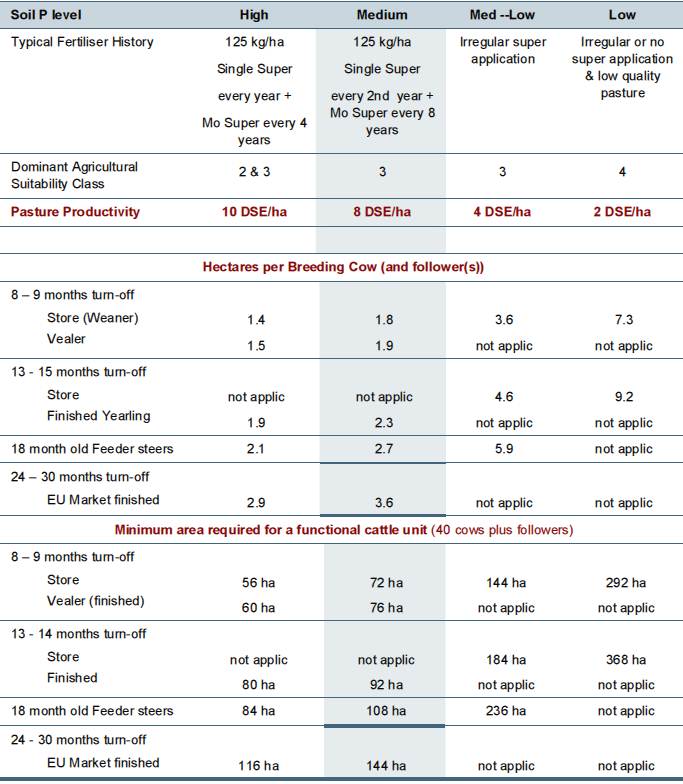
Table 1 Estimated carrying capacity and area for grazing lands in the Hunter region
Footnotes:
One hectare = 2.471 acres, One acre = 0.406 ha.
An average of 8 DSE/ha is typical of Hunter region beef cattle properties with a basic, but professional focus on pasture management. With increased fertiliser use, the growth of clovers and sub-clover is more vigorous. The resultant increased pasture quality and mass and the availability of higher quality feed over a longer period, allows better liveweight gain and increased stocking rates. Site features (eg soil type & depth, drainage and risk of environmental degradation), however, ultimately limit the scope for increased production, and the cost / benefit of the response gained.
Further subdivision of rural properties not capable of sustaining a functional breeding unit and the creation of additional dwelling entitlements is not justified based on current productivity levels alone. Strategic assessment of the key features and desired outcome for specific localities is required.