Burial of on farm deadstock
By Admin, on April 1st, 2011
Figure 1. Burial is a traditional deadstock disposal method, but it must be done properly. This article describes some of the requirements for on-farm burial of deadstock as specified in Ontario Regulation 106/09 under the Nutrient Management Act, 2002 (NMA). The article does not cover all burial requirements contained in the regulation nor deadstock burial under emergency situations such as after a fire or other catastrophe. For this information, refer to the regulation.
HOW AND WHY BURIAL WORKS
For generations, farmers have buried deadstock by digging a pit or trench, placing carcasses in it and covering them with excavated soil material (Figure 1). Burying deadstock must be done properly to:
- prevent a nuisance to neighbours
- protect against digging by scavengers
- maintain biosecurity for adjacent livestock operations
- protect local ground- and surface water
Decomposition of buried deadstock is like a slow, composting process. Composting deadstock works best if they are mixed well with a good carbon substrate, such as sawdust, under favourable moist, warm, aerobic conditions. Similarly, burying deadstock works best if they are:
- mixed with soil (or have as much soil to deadstock contact as possible)
- buried in well-drained, warm soils, with more aerobic (oxygenated) conditions.
Under favourable conditions, decomposition can occur in a few months, especially in the biologically active upper layers of the soil. However, under poorer conditions, decomposition can take years, especially if deadstock are packed together in wet soil, and buried
deep, where soil temperatures are cool.
ADVANTAGES OF BURIAL
- simple, requiring little training
- uses readily available equipment
- relatively inexpensive
- suitable to many locations
- biosecure, since deadstock remain on the farm
The regulation permits farmers to keep deadstock in cold storage for up to 14 days following death, or in frozen storage for up to 240 days. Freezers can work well in conjunction with burial for smaller deadstock, since a freezer can be filled over time, then emptied in a burial pit when digging conditions are suitable. Because freezers have fixed volumes, it is easy to match their frozen contents to a predetermined burial pit size.
SELECTING THE RIGHT SITES FOR BURYING
Locating the burial site in the right place is critical for good carcass decomposition and protection of the environment. Generally, soil materials ranging from sandy loams to clays that are well-drained to imperfectly drained are suitable for burial. However, the regulation does not permit burial of deadstock in soils where there is a higher risk of polluting groundwater. These soils include:
- organic soils (more commonly known as peat, muck, bog or fen soil)
- soils considered hydrologic soil group AA, which have a combination of rapid infiltration rates (e.g., gravel) as well as a depth to the uppermost identified bedrock layer of less than 0.9 m. These conditions are not common in Ontario.
The regulation does not permit the burial of deadstock in areas subject to flooding once or more every 100 yr. To find out if you are in such an area, contact your local conservation authority or municipality. The regulation requires the lowest point of a burial pit to be at least 0.9 m (3 ft) above the top of the uppermost identified bedrock layer or aquifer. Table 1, above, shows several setbacks for burial pits. For more specific information, see the regulation itself.
DIGGING SAFELY
The regulation specifies a maximum of 2,500 kg total deadstock per burial pit, so the weight of each dead animal determines the number of deadstock per pit (Table 2, above). Due to the 2,500 kg/pit limitation, very large or deep pits are not necessary; generally, digging deeper than about 1.2 m (4 ft) makes little sense. Limiting the depth of burial pits to 1.2 m places deadstock in the biologically active part of the soil, protects groundwater and avoids the dangers of deep trenches.
The Construction Safety Association (CSA) defines trenches (pits) as excavations where the depth exceeds the width of the pit. The CSA cautions anyone digging trenches to be aware of factors such as soil type, moisture content, weather or excessive weight that might cause cave-ins, such as heavy equipment beside a trench.
Never climb into any pit deeper than 1.2 m (4 ft) unless it is properly sloped, shored or protected by a trench box. This is impractical for burying deadstock. Figure 2 shows different pits 1.2 m (4 ft) deep that will hold about 2,500 kg of deadstock. Closing these pits would require a minimum of 0.6 m (2 ft) of soil, to form a mound higher than the level of the ground at the perimeters of the pit.
Figure 2. Each of these pits will hold about 2,500 kg of deadstock. Bury smaller deadstock in narrow pits, to maximize soil-to -carcass contact, and larger deadstock in wider pits, to accommodate their awkward body dimensions. 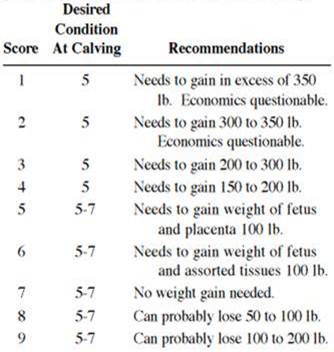 Table 3 TYPE OF PITS
There are three types of pits (Table 3): single-use, multiple-use or auger pits (Figure 3). The type of soil determines the strength and stability of pit walls; this is especially important for pits that will remain open for up to 120 days. Suitable soils that will allow pit walls to be stable for an extended period include:
- Type 1 soils (compacted loamy and clayey soils, dense loamy glacial tills)
- Type 2 soils (well-structured loam, clay loam, clay)
Unsuitable soils that might have unstable pit walls over an extended period include:
- Type 3 soils (sand, granular materials, and silty or wet clays)
- Type 4 soils (silty clays with high moisture content)
Once a pit is dug, its sides are exposed to drying. The longer the exposure, the greater the risk of a cave-in. Rain, melting snow, thawing earth and surface water all produce changes in soil conditions that can severely affect
Figure 3. Pits can be dug quickly using a tractor auger. Augers over 0.6 m (24 in.) in diameter and augers that dig more than 1.2 m (48 in.) deep are costly and require a lot of tractor power. Auger pits will only hold a few smaller deadstock.pit stability. Heavy equipment beside a pit can affect its stability, so stay as far away as possible. Place the soil excavated from the pit at least 1 m (3.3 ft) from the edge of the excavation.The regulation specifies a burial pit must be immediately closed when 120 days have elapsed since the day the pit was first opened, or when 2,500 kg of deadstock have been buried in the pit, whichever comes first.
HOW BIG SHOULD THE PIT BE?
Deadstock have odd shapes, making them difficult to bury, especially if they have begun to bloat or rigor. The effective burial bulk density (EBBD) of deadstock is the weight of a deadstock carcass at death, divided by the effective volume it takes up in a burial pit.
EBBD = weight of deadstock carcass at death
________________________
effective volume it takes up in burial pit
The effective volume is difficult to establish, because different animals have different profiles and awkward shapes when buried, and there are unavoidable air pockets. The EBBD of deadstock is estimated in the broad range of 175–1,000 kg/m3 (10.9–62.4 lb/ft3 ), but for planning, use 400 kg/m3 (25 lb/ft3 ). When soil is placed on deadstock, it fills some air pockets, and as deadstock decomposes, soil settles into body cavities.
Use Table 4 as a guide for burial pit dimensions dug by backhoe. Modify dimensions as necessary based on the shape of your deadstock. It is better to over-dig than under-dig. Once deadstock are in the pit, do not move them again. Because deadstock must be covered with at least 0.6 m (2 ft) of soil, multiple-use pits may have to be longer than shown in Table 4. The dimensions in Table 4 are based on:
- EBBD: 400 kg/m3 (25 lb/ft3 )
- 2,500 kg ÷ 400 kg/m3 = 6.25 m3 (220 ft3 )
- Pits are 0.9–1.2 m (3–4 ft) deep
- Pit widths are in multiples of 0.6 m (2 ft), a typical backhoe bucket width.
- The top of deadstock is below original grade level.
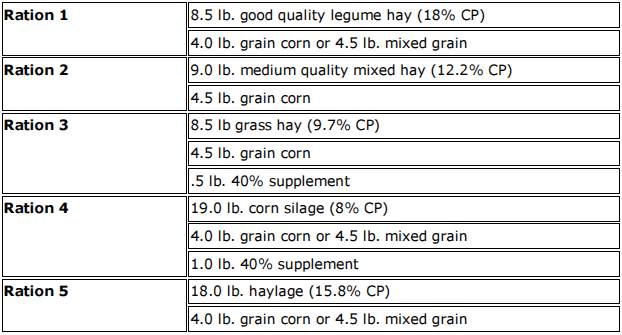 Table 5 Formula for calculating length of pit in metres:
L = Total kg of carcasses
÷ EBBD (kg/m3 )
÷ width of pit (m)
÷ depth of pit (m)
Use Table 5 as a guide for tractor auger burial pit dimensions, knowing the total weight of deadstock to bury and the type of animal. Modify dimensions as necessary, based on the shape of your deadstock. Unless an auger pit has a large diameter and is augered deep, it will not hold many deadstock, but it may be an option for some operators.
DIGGING NEAR FIELD DRAINAGE TILES
Field drainage tiles are prevalent on Ontario farms. To
prevent leachate reaching them, avoid burying deadstock near tiles. The regulation specifies that every part of a burial pit must be at least 6 m (20 ft) from a field
drainage tile. Further, if any part of the burial pit is less
than 15 m (50 ft) from a field drainage tile, deadstock
must be placed so that the highest point of the
uppermost deadstock is lower than the lowest point of
the nearest field drainage tile. This way, any leachate
from the burial pit would be below the level of the tile
and would not be able to reach it (Figure 4).
Figure 4. The regulation specifies that deadstock cannot be buried within 6 m (20 ft) of a tile drain. If there is a tile drain within 6–15 m (20–49 ft) of the burial pit, the highest point of the uppermost deadstock must be below the level of the lowest point of the tile drain. If tiles are more than 15 m (49 ft) from the burial pit, no tile-related restrictions apply.deadstock near tiles. The regulation specifies that every part of a burial pit must be at least 6 m (20 ft) from a field drainage tile. Further, if any part of the burial pit is less than 15 m (50 ft) from a field drainage tile, deadstock must be placed so that the highest point of the uppermost deadstock is lower than the lowest point of the nearest field drainage tile. This way, any leachate from the burial pit would be below the level of the tile and would not be able to reach it (Figure 4).
PLACING DEADSTOCK IN BURIAL PITS
Within about 48 hr of death, some carcasses begin to bloat due to retained gases; lancing (puncturing or venting) carcasses larger than 100 kg is sometimes necessary. Use a bale spear to cut a deep stab wound posterior to the ribs to vent the thoracic and abdominal cavities. Lance deadstock just before placing it in the pit. Noxious gases and bodily juices are likely to escape.
Figure 5. Pushing large deadstock, such as cows, into a burial pit is safer than getting too close to the pit with a tractor and loader and dropping it in. Plan carefully how to place carcasses in the pit. Do not drop them in from a tractor front-end loader bucket unless your front wheels are well back from the pit. Push large, heavy carcasses, such as cows, into the pit from the side. Always stay as far away as possible from the pit with the tractor (Figure 5). Adding lime on top of carcasses is not recommended. In the past, lime was added to discourage scavengers, prevent odours and slow decomposition. Correctly buried deadstock will not attract scavengers or produce odours.
COVERING DEADSTOCK WITH SOIL
Place as much soil as possible in the spaces between deadstock to encourage quicker decomposition. Reduce the chance of a cave-in by pushing in soil rather than dumping it in. The regulation specifies a burial pit
Figure 6. Mounded soil on top of the deadstock reduces the chance of scavenging and allows for settling as the deadstock decomposes and soil falls into the voids. must be closed by filling it with enough soil that the top of the fill soil forms a mound higher than the level of the ground at the perimeter of the pit by the greater of half the depth of the pit measured with reference to its lowest point or 0.6 m (2 ft).
This ensures enough soil on top of the deadstock to reduce the chance of scavenging, but also allows for settling as the deadstock decomposes and soil falls into the voids between them (Figure 6). The minimum amount of soil required above ground after closing the pit varies depending on pit depth (Table 6).
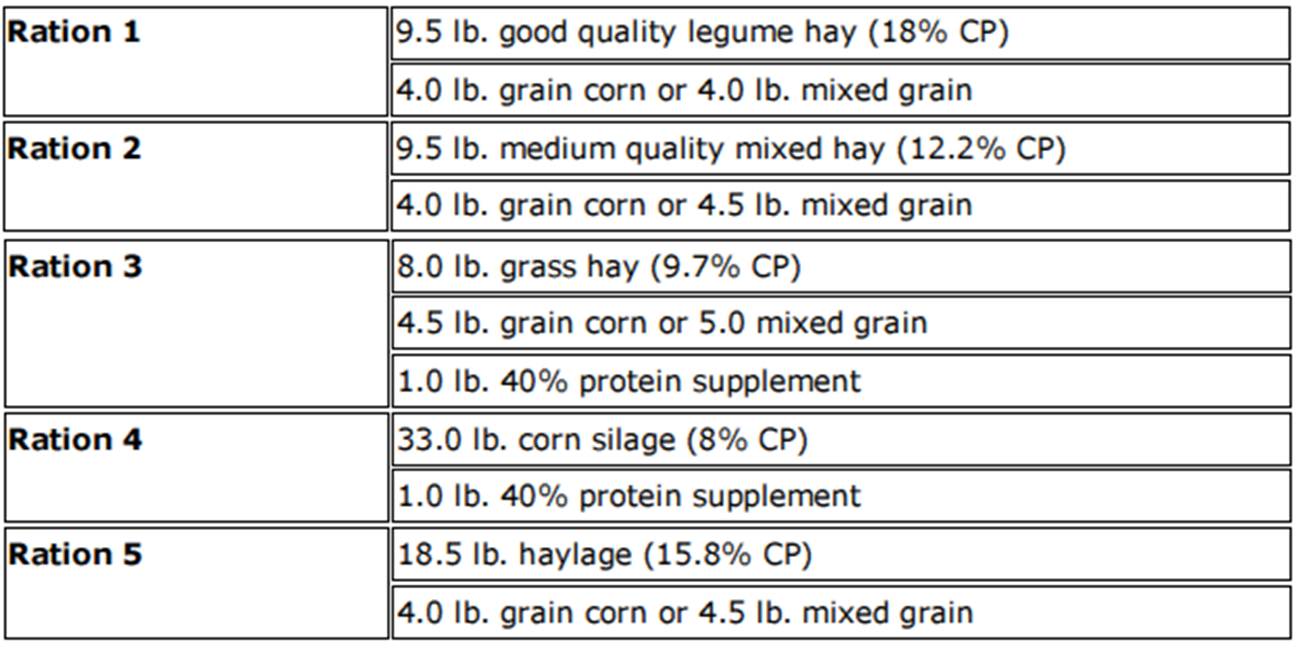 Table 5 Lightly compact the soil using a front-end loader or backhoe bucket. Do not drive over the pit. Mark the area with a flag for a period of time so you can find the location again and monitor it for scavenger problems, uneven settling or leaching. See O. Reg. 106/09 for the record keeping required for the deadstock, including the location. Include GPS coordinates of the site if possible.
CASE STUDY – COST OF BURIAL
Joe grows 25,000 chicken broilers per crop on a 9-week cycle and produces 6 crops per year. His death loss is 4%, and the average carcass weight is 0.76 kg. Joe wants to use chest freezers holding 0.71 m3 each (25 ft3 ) to collect and freeze dead birds as they occur. He proposes burying all the birds from the freezers once every 6 months, or about every 180 days, in May and November, when the freezers are full.
- How many freezers does Joe need?
- How big a burial pit should the hired backhoe operator dig each time if the bucket is 0.6 m (2 ft. wide)?
- What is the cost per year per kg of deadstock? 1. 25,000 birds x 6 crops x 4% death loss x 0.76 kg/bird = 4,560 kg/yr (2,280 kg every 6 months)
- At EBBD 400 kg/m3 , freezers hold 0.71 m3 x 400 kg/m3 = 284 kg each
- 2,280 kg ÷ 284 kg/freezer = 8 freezers
2. Extrapolating from Table 4 for small animals and 2,280 kg, the pit must be at least
0.6 m wide x 1.2 m deep x 8.2 m long (2 ft x 4 ft x 27 ft).
3. New freezers of this size cost about $1,000 each, so 8 freezers, amortized over a 10-yr life, is $800/yr
(8 x $1,000 per freezer/10 yr). Assuming a hired backhoe and operator costs $80/hr, and 5 hr travel to and from the farm, dig the pit, push the birds in, then cover and close the pit, this is $400 twice annually, or $800/yr.
The burial pit costs per year are:
$800 for freezers
$800 for hired backhoe labour
$1,600 total yearly cost
The cost to bury (not including labour to transport and empty freezers of deadstock to the burial pit) is:
$1,600/4,560 kg = $0.35/kg ($0.16/lb)
Author: Hugh Fraser, P. Eng., Agricultural Engineer, OMAFRA, Vineland, and reviewed by Dan Ward, P.Eng., Agricultural Engineer, OMAFRA, Stratford.
|
|


