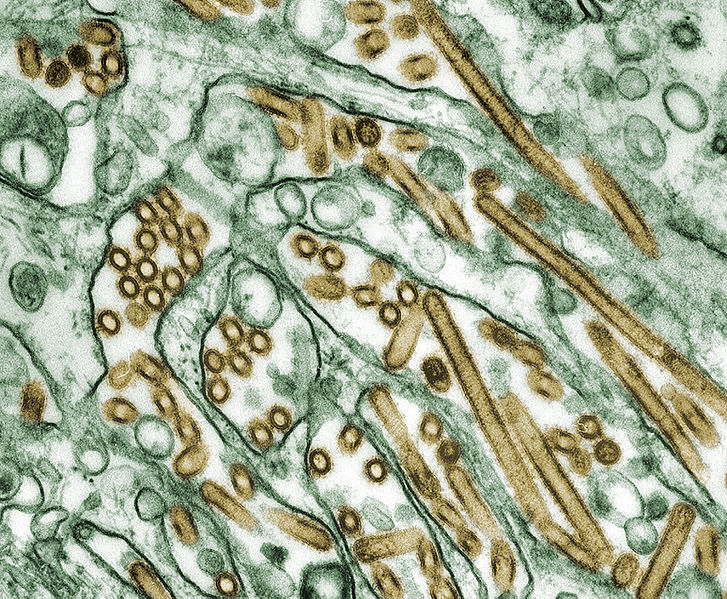
Electron micrograph of Avian influenza. A H5N1 viruses.
Defining Avian influenza.
Electron micrograph of Avian influenza. A H5N1 viruses.
Avian influenza is a disease of birds caused by an influenza virus. The avian influenza virus is not the same as the human influenza virus that normally causes influenza in humans, particularly in winter. There are 144 different subtypes of the avian influenza virus and only rarely do any of these subtypes affect humans. On these occasions the avian influenza virus does not normally spread from human to human, in contrast to the human influenza virus which spreads quickly and easily between humans.
H5N1 is the subtype of avian influenza that is affecting birds and occasionally humans in Asia, Europe, the Middle East and Africa.
No cases of H5N1 have been reported in either birds or humans in Australia.
How is avian influenza spread to humans?
On rare occasions overseas, some strains of avian influenza have been passed from infected animals to humans who were in close contact with those animals or with their faeces or secretions. Simple hygiene measures when handling animals greatly reduces the risk of human infection.
Some of the human cases in Asia acquired the infection through consumption of raw infected poultry or poultry products. Thorough cooking of food removes this risk because the cooking process destroys the virus.
Even if the H5N1 subtype of avian influenza did enter Australia, the likelihood of human infection is extremely low.
The international situation.
The H5N1 subtype of avian influenza that has now emerged in many Asian countries and in Europe, the Middle East and Africa, is an altered form of the 1996 virus (the first time the subtype known as H5N1 was recognised in China). A very small number of human cases and deaths have been confirmed in people who had close contact with H5N1 infected chickens or their environment, but there has been no evidence of effective human-to-human spread.
Symptoms of avian influenza in humans.
Although human cases of avian influenza are rare, people who are infected with the H5N1 virus can become seriously ill and may die.
The symptoms are similar to those of human influenza, including fever, cough, aching muscles and a sore throat. The human symptoms of avian influenza can also include eye infections and serious respiratory infections, including pneumonia.
There is currently no vaccine to provide people with specific protection against avian influenza. A number of anti-viral drugs designed to fight the human influenza virus may also help to prevent serious illness in people who become infected with the avian influenza virus.

Avian influenza research.
Can avian influenza cause an influenza pandemic?
Avian influenza research.
The avian influenza virus does not spread easily or quickly between humans. However, influenza viruses have the capacity to mingle with one another to create a new strain. This is why Australian health authorities are keeping a close watch on overseas outbreaks of avian influenza. So far, H5N1 has not shown any capacity to create a new strain by mixing with influenza viruses of mammals (dogs, cats, pigs, humans) or any other non-avian species.
If someone infected with the human influenza virus also becomes infected with the avian influenza virus, there is a risk that the viruses could mix and create a new virus that spreads easily from person to person. This could lead to a worldwide epidemic (a ‘pandemic’) of influenza.
The situation in NSW.
NSW Health is following the advice of the World Health Organisation (WHO) which has alerted countries about the need to increase surveillance and to have in place plans to contain any outbreaks of avian influenza.
The risk of avian influenza among humans remains extremely low. The health risk from normal winter human influenza is much greater. People can protect themselves from human influenza by:
- getting a flu shot;
- washing their hands regularly and thoroughly with soap and warm water;
- staying at home if sick to minimise transmission to workmates.
A free-call National Information Line has been established by the Australian Government Department of Health and Ageing, phone 1800 004 599.
If you have any concerns about the health of wild or domestic birds in your local area you should contact:
- your local veterinarian,
- your Rural Lands Protection Board (RLPB),
- NSW Department of Primary Industries,
- the emergency animal disease watch hotline on 1800 675 888.
Author.
George Arzey



