 Key Points
-Know the specifications and customer requirements of your target markets.
-Know how to assess and monitor the progress of live animals towards target markets.
-Manage the grazing system to achieve growth targets and successful market outcomes.
-Use high nutritional quality finishing systems to ensure cattle keep growing to slaughter.
-Seek feedback and implement practices to improve the management of your production system.
-Regularly evaluate new marketing options and implement those more profitable to the beef enterprise.
Why is meeting market specifications important?
A successful grazing business makes a sustained profit by growing and converting pasture and conserved feed into beef products that consistently meet market specifications. Every producer strives to:
-Gain a reputation as a reliable supplier of quality beef;
-Maintain market access to as many markets as possible; and
-Be financially rewarded when a high proportion of stock consistently meets customers’ requirements.
This is a ‘win–win’ situation for both you and your customers.
There is a wide range of potential markets available to beef producers in southern Australia. These include the sale of weaners, vealers, feeder steers, backgrounding cattle for feedlots, bull beef, cull cows, pregnancy-tested in-calf heifers and cows, unjoined heifers, domestic and/or export trade finished cattle, animals for live export and niche market cattle. Each market has defined specifications for animals to return the highest price.
This article assumes that you have bred or purchased the cattle genetics to meet product specifications and is designed to help you identify the best priced market you can target, and ensure you deliver a quality product to its requirements.
At the same time you need to maintain the flexibility to diversify and realign your target markets and options depending on opportunities and changing production circumstances. There will be times when your pastures will not allow stock to meet target market specifications, or when alternative markets become more profitable. When these circumstances arise, maximum profitability may be achieved by selling animals in other markets, or by moving to alternative feeding strategies.
Clearly there is a balance between maintaining long-term relationships with your regular customers and exploring new market opportunities. As specifications can vary between buyers and change over time, it is important that you review the specifications of targeted markets with your regular buyers as a matter of routine. This personal approach to market development may also involve entering into forward contracts or similar undertakings to ensure your cattle are marketed to achieve maximum profit.
How does this article assist you?
This article covers the period from the time calves are weaned to the point of sale, and includes the management of trading stock and culled breeding animals. It aims to help you increase financial returns by better meeting target market specifications, exploiting market opportunities and managing the risks.
A key aim is to apply recommended best practice to the nutrition, health and welfare of sale stock to meet the target market specifications at the predetermined time of sale. Regular evaluation of new market opportunities and alternative selling options also assist in sustaining the profitability of your beef enterprise. Managing the marketing system needs careful implementation based on previous experience, the anticipated rainfall pattern and seasonal outlook.
Achieving the highest price is not necessarily the best business option. The most profitable strategy is usually a combination of the best margin per kilogram with the maximum kilograms of beef produced/ha. Price and cost of production need to be considered along with the stocking rate (DSE/ha).
The value of meeting market specifications
Information collected from the marketplace by the National Livestock Reporting Service (NLRS) contains detail of price differences payable due to the variation and degree of muscle and fat. The key message is that meat processors and livestock buyers pay according to the degree of muscularity of a beast and, therefore, the potential yield.
Table 1 illustrates the price variations observed for different muscle and fat scores within the yearling steer 330–400kg category. This category typically represents domestic trade steers. The table demonstrates the price advantage achieved for finished animals meeting preferred market specifications.
In this example the optimum grade is clearly the B3 (muscle score B and fat score 3), which averaged 8¢ above the B2. However, these animals only represented 1% of total numbers. D muscled cattle received the greatest discounts, averaging up to 29¢/kg lower than the C muscled cattle. Eighty five percent of medium weight yearling steers were C muscled, while 74% had a fat score of 3. More importantly, when the market shows a negative trend the variation between the C and D muscled cattle widens as buyers apply larger discounts on the plainer muscled cattle.
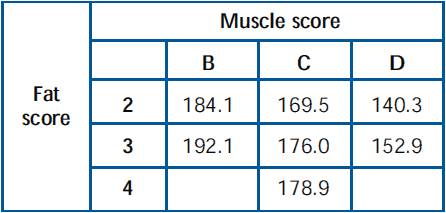
Table 1: Price variation (cents/kg liveweight) with muscle and fat score (category: yearling steer, 330–400kg)
Principles of meeting market specifications
-Know your production system and the specifications and customer requirements of your target markets.
-Implement a plan to market cattle to specification on time (as opposed to producing cattle for sale and then finding a buyer who wants those specifications).
-Manage the grazing system to achieve livestock performance targets and successful market outcomes.