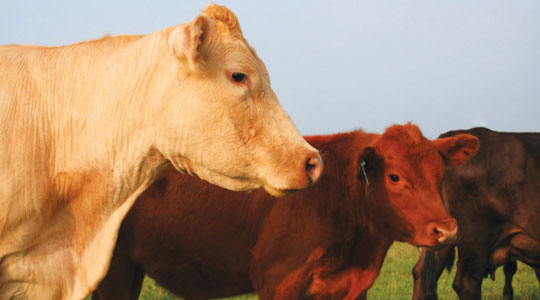
 Guidelines for selecting the breeding system
Evaluate the merits of changing breeds, crossbreeding or within breed selection alone. In general the genetic variation within breeds is large and will allow many breeds to compete in a range of markets. So the decision about whether to move to an alternative breed or cross will be based on an assessment of whether the size of the changes needed in the traits of your current herd is so great that it will take too long to achieve by simply selecting better bulls within your existing breed and/or source of bulls. It is important to calculate the costs, time and effort required to implement a new breeding system to ensure that the advantages outweigh the difficulties.
Options include:
-Replace the existing herd by buying in an alternative breed. This is the quickest method, but also the most costly. Embryo transfer is also an option, although this may be cost prohibitive for commercial operations.
-Build up to the desired breed or combination by crossing with bulls from the chosen breeds. This option is slower, but will generally be less costly and brings with it the complementary hybrid vigour that comes from crossing genotypes, during the transition to the new breed or breed combination.
Although ongoing advantages can be achieved by implementing a planned crossbreeding program, you also need to consider the potential disadvantages, such as:
-Additional herd management associated with crossbreeding.
-Any discounts that might be experienced when selling crossbred animals, particularly for some breeds when sold through the saleyard system.
-Time and cost required to bring the herd into ‘equilibrium’.
-Crossbreeding is better suited to larger herds, with more bulls, and bigger lines of cattle for sale.
Sources of information for breed and crossbreed averages for important traits are presented in Tools 1.2 and 1.3. Tool 1.2 provides information about the recently released multibreed EBVs that for the first time will allow valid comparison of bulls across a selection of breeds for a range of traits.
After deciding on what breed and whether to crossbreed, further genetic progress relies on selection of replacement bulls within the available genotypes.
What to measure and when
Consider a change in genotype when the:
-Potential for marginal return on investment for an alternative breed is greater than for other options for investment, and
-Cash flow during the transition period to the new breed or cross is maintained at acceptable levels.
This is a strategic decision.