Advantages of a Shortened Breeding Season
1.More concentrated management (time and labor).
2.More uniform group of calves by age, size and weight to sell at weaning.
3.More uniform group of calves by age, size and weight to feed as a management group if calves are kept and fed.
4.Early calving cows usually wean heavier calves.
5.Nutrient requirements of the cow herd will be much easier to meet during the critical stages of the production cycle with all cows calving within a shorter period.
6.Eliminate cattle with low fertility from the breeding herd.
With shorter breeding seasons success will be dependent on feeding and breeding management. Adequate nutrition and rest are essentials to fertile and cycling cows. Equally important is the health, condition and fertility of the bull if natural service is used. During the breeding season it is important that the herd be checked routinely to observe breeding progress.
Length of Breeding Season
The length of the breeding season is an important factor in determining pregnancy rate. It has been shown that late-calving cows have smaller calf crops than do early calving cows. The only reliable method for making sure cows calve early in the calving season is to have a short breeding season.
A 60-90 day breeding season should be a goal of most cow-calf producers with 45 to 60 days being more desirable. This could be achieved by gradually reducing the breeding season each year by 2-3 weeks which would result in fewer open cows being culled within a given year. Adequate nutrition and management are essential to success.
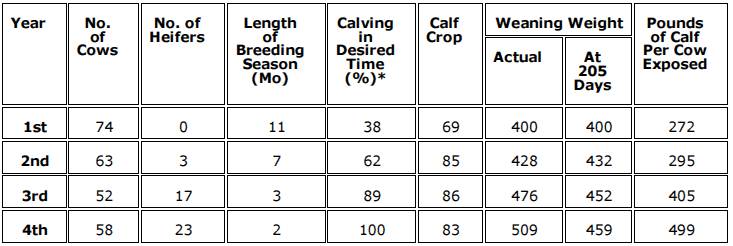
Effect of Shortening the Calving Season.
*Of cows calved.
Breeding Replacement Heifers
When considering a shortened breeding season, heifer management at breeding will be of importance. Yearling replacement heifers should be bred 3 weeks prior to the breeding of the mature cow herd. Heifers will require a longer period of time to begin cycling and show heat after calving than mature females.
Heifers bred before the main cow herd, will calve earlier in the season and will be cycling normally by the time the main cow herd is being bred the following year. If we want a heifer to be a good lifetime producer she must calve early. She must show heat and conceive early in the breeding season. Heifers calving late usually become late calving cows.
The lifetime production of beef females can be increased by calving at two years of age. This can be achieved by producers willing to provide the required nutrition and management.
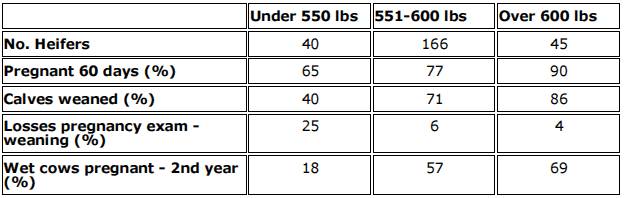
Reproductive Performance in Hereford Heifers as Influenced by Weight at Start of Breeding



