
Suckling
Cows that are suckled have longer intervals from calving to first oestrus. Flushing and 48-hour calf removal can be helpful in improving reproductive performance. Neither practice alone is as beneficial as a combination of the two.
Removing calves for 48 hours can be a problem in some situations. The best way to accomplish this is to combine calf removal with working the calves. Calves must not nurse for 48 hours to get maximum results.
Weight Changes
Weight changes near breeding time affect pregnancy rate. Sixty-seven percent of the cows that held their weight from calving to breeding conceived on first service as compared with 43% in cows losing weight during this period. The pregnancy rate after 21 and 90 days of breeding was also higher in cows holding their weight as compared with cows losing weight.
Body Condition Scoring
Body condition is important in determining when a cow shows estrus following calving. Ninety-one percent of the cows in good body condition at calving had shown estrus by 60 days post-calving, as compared with 61 % of the cows in moderate condition and 46% of the cows in thin body condition.
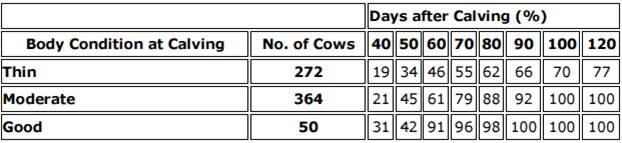
Body Condition at Calving and Heat after Calving
As has been discussed, body condition of the cow at calving (moderate or good) and post calving to breeding will have a direct bearing on improved breeding efficiency.
Most scoring systems have been based on palpation of the back and hindquarters of the cow. Particular attention is given to the chine, loin. rump, tail head. hook bone and pin bone regions. Cows in one system are scored on a scale of 1 to 5. A score of 1 indicates severe under conditioning while a score of 5 is assigned to over conditioned obese cows.
Scoring System
Score 1. Individual spinous processes have limited flesh cover; the ends are sharp to touch; they give a definite overhanging shelf effect to the loin region.
Score 2. Transverse processes can be felt, but not prominent; rounded with some fat cover.
Score 3. Transverse processes can be felt with firm pressure; processes appear smooth; the overhanging shelf effect is not noticeable.
Score 4. Individual processes only felt with very firm pressure; rounded with no overhanging shelf effect; loin and rump appear flat; tail head and pins are rounded.
Score 5. The structure of the transverse processes, hook and pin bone region is not apparent; fat deposition is obvious and prominent.
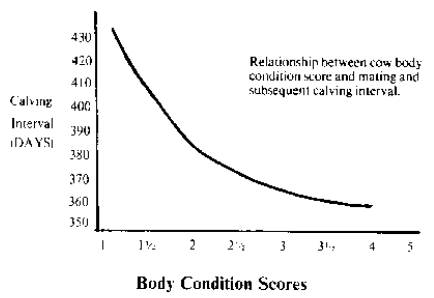
Figure 1: Body Condition Scores vs. Calving Interval (days)
The relationship noted above has led to the recommendation of a Mating Target Score of 2½.
It may not be necessary or practical to palpate all cows under most circumstances but an understanding of the scoring system and what is involved would allow eye-balling or visual appraisal of cows to evaluate condition.
Cows should be in moderate to good body condition at calving time to attain optimum reproductive performance.
Possible Scoring Use
1.Observe cows one or two months before calves are scheduled to be weaned. If cows are thin, supplement feed or wean calves.
2.Sort cows by body condition at weaning time - feed accordingly.
3.Prior to calving.
4.Middle of calving season (prior to breeding).
Suitable adjustments must be made to the feeding program to meet the target score if cows are indeed too thin.



