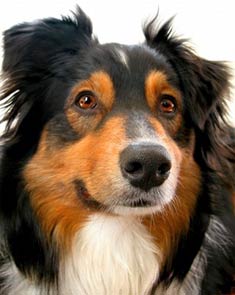
 The Australian shepherd is a breed of herding dog that was developed on stations (ranches) in Australia. Despite its name, the breed, commonly known as an Aussie, did not originate in Australia and is American. They acquired their name because some of the Australian sheepdogs arrived in the United States with boatloads of Australian sheep. The breed rose gradually in popularity with the boom of western riding after World War I. They became known to the general public through rodeos, horse shows, and through Disney movies made for television.
For many years, Aussies have been valued by stockmen for their versatility and trainability. Similar to the popular English Shepherd breed. While they continue to work as stockdogs and compete in herding trials, the breed has earned recognition in other roles due to their trainability and eagerness to please, and are highly regarded for their skills in obedience. Like all working breeds, the Aussie has considerable energy and drive, and usually needs a job to do. It often excels at dog sports such as dog agility, flyball, and frisbee. They are also highly successful search and rescue dogs, disaster dogs, detection dogs, guide, service, and therapy dogs.
Color
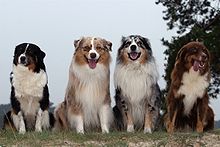
The wide variation of color combinations comes from the interaction between the a color allele, which is either black (B) dominant or red (b) recessive, and the dominant merle allele (M). Together, these provide four coat-color aspects that can appear in any combination:
Black, with tan points and/or white markings on the face, collar, legs, chest, underbelly. Solid black dogs are equally desirable as ones with tan and/or white.
Red (Liver) with or without tan points and/or white markings on the face, collar, legs, chest, underbelly. Either white or tan points are required. Solid Red dogs are equally desirable as ones with tan and/or white.
Blue Merle (a mottled patchwork of gray and black) with or without tan points and/or white markings on the face, collar, legs, chest, underbelly. Neither white nor tan points are required. Solid Merle dogs are equally desirable as ones with tan and/or white.
Red Merle (a mottled patchwork of cream and liver red) with or without tan points and/or white markings on the face, collar, legs, chest, underbelly. Neither white nor tan points are required. Solid Merle dogs are equally desirable as ones with tan and/or white.
 Temperament
The breed is typically highly energetic, requiring a great deal of exercise and attention. Sometimes they can be calm and easy-going. An Australian shepherd enjoys working, whether it is learning and practicing tricks, competing in dog agility, or engaging in any other physically and mentally involving activity.
Dogs may show reserved and cautious guarding behaviors. They are kind, loving, and devoted to those they know. They are very loyal to their owners, and are rewarding dogs if treated well. Because the breed was developed to serve on the ranch, a job which includes being protective of its property, it is inclined to bark warnings about neighborhood activity, but its barks can be very annoying and unpleasant. However, it is not inclined toward obsessive barking
The Aussie is intelligent, learns quickly, and loves to play. This means that a bored, neglected, unexercised Aussie may invent its own games, activities, and jobs, which to a busy owner might appear to be hyperactivity: for example, an Aussie may go from being at rest to running at top speed for several ‘laps’ around the house before returning to rest. Without something to amuse them, Aussies can become destructive. Aussies also do best with plenty of human companionship: they are often called “Velcro Dogs” for their strong desire to always be near their owners and for their tendency to form intense, devoted bonds with select people.
The Australian shepherd has a reputation as a highly intelligent and versatile stock dog with a range of working style s. A good working Aussie is quick, thoughtful, and easy with its stock. The ability for the breed to adapt to the situation and think for itself makes it an excellent all-around worker. For this reason the Aussie is often chosen to work unusual livestock such as ducks, geese, and commercially raised rabbits.
Australian shepherds can become extremely destructive if their energy is not directed in a positive way. These dogs require a minimum of 2–3 hours a day of play, exercise, and attention. The dogs thrive in rural, ranch like conditions, and need space to run and play in an urban setting. The Australian shepherd is a high spirited dog, that requires much attention and work. Teaching them tricks keeps them focused and happy, which also keeps their mind working. The breed also has great stamina and can live in a variety of terrain. That’s why they are a popular pick as trail dogs and working dogs.
Health
There are several health problems that an Australian shepherd can have vision problems.[11] Epilepsy is also a concern. In merle to merle breeding, the puppies who have inherited two copies of the merle gene have an increased risk of being born blind, and/or deaf.