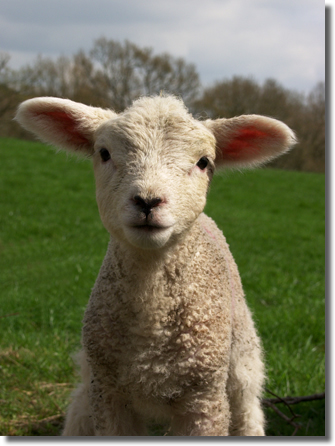
Lamb
Joining Sheep
Lamb
Joining maiden ewes at an early age enables good managers to exploit potential advantages in sheep breeding and selection programs in merinos through reduction of the generation interval. It also offers an alternative action to quickly recover flock numbers following drought.
The age at which a ewe will join successfully for the first time is determined chiefly by liveweight and condition. Nutrition is the main influence on these attributes, but breed and season of birth also play a part.
Joining ewes so they lamb when they are about a year old is not a common practice in Australia. This is because weaner reproduction is unreliable, and because many farmers believe–mistakenly–that early breeding slows down growth and causes long-lasting production losses.
In Australia the most common age for first joining sheep is 18 months. In most seasons this allows time for ewes to reach acceptable liveweights before joining. It has also been the best time to bring maidens into the yearly program on properties where there is only one joining a year. Generally, these ewes would lamb five times and then be cast for age.
In some cases ewes are not mated till 30 months of age and do not have their first lamb until they are three years old. This has little to recommend it because ewes are carried through to older, less productive ages and costs are higher per animal. Also, ewes that have not lambed show oestrus for a shorter time than those that have, and are less likely to become pregnant.
If adequate nutrition is available, producers should consider joining ewes at the first opportunity.
Joining at 7–9 months
Mating well grown, adequately fed and properly managed ewe lambs can have the following advantages.
• The pregnancy rate could be as high as 60-80 per cent for young cross breed ewes joined on a rising plane of nutrition at liveweights averaging 35 kg or more.
• Fertility is increased-ewes mated as lambs are more reliable breeders, make better mothers and have fewer lambing troubles.
• The reproductive lifetime is longer.
• Ewes can be culled younger.
• In self-replacing flocks, replacements are joined younger, saving almost a year’s feed; and the generation interval is reduced, increasing the rate of genetic improvement.
• In flocks that are not self-replacing, early joining offers the opportunity to buy replacement ewes younger (which is cheaper), and the potential for increased meat production from extra lambs. There can, however, be disadvantages in early joining.
• There is a short-term check in growth and wool production; however, with adequate nutrition this will be overcome by the next joining.
• Better nutrition and more management skills are necessary before joining, during pregnancy, and from lambing to second joining.
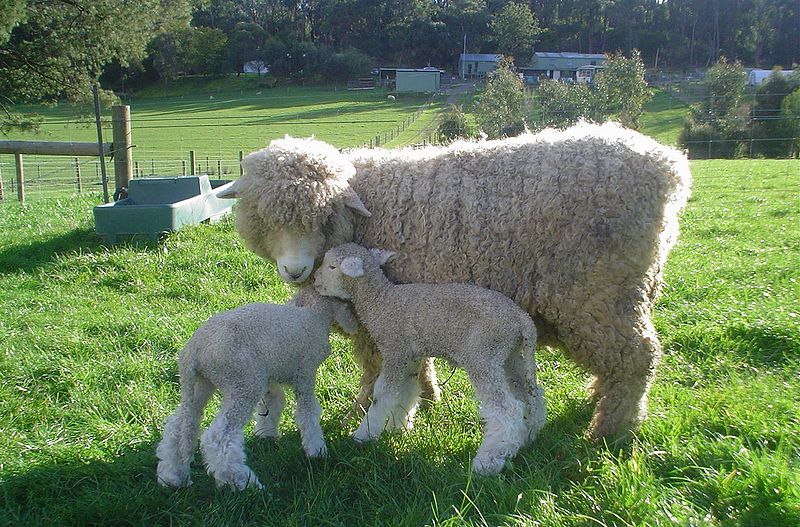
Ewe and lambs
Age of first joining sheep
Ewe and lambs
• Lamb losses are higher and extra supervision is needed at lambing.
• Lamb marking percentages from ewes joined early are lower and lambs are lighter than those from ewes joined at around 18 months.
• The minimum liveweights for 18 month old ewes at joining are 40 kg for medium-wool Merinos and 45 kg for crossbreds; above these levels, the higher the liveweight the better the lambing performance. However, in Australia these liveweights are often not reached even by 18 months of age especially in fine and superfine wool strains. (Note that these weights do not include the weight of wool.)
• There are more maiden ewes in the flock because fewer of them produce a lamb from the first joining, so the total lamb marking percentage is lower.
Considerations at first joining
Whether you join ewes for the first time at 7–9 months or around 18 months, there are similar factors to consider. These become less important as the age of first joining increases, but you should always manage maiden ewes differently from previously joined ewes.
Breed: There are marked differences among breeds in the ages and liveweights at which they first show oestrus. Certain breeds, such as the Dorset, regularly reach puberty younger than others, and crossbreds reach puberty younger than purebreds because of hybrid vigour.
Season of birth: If they are grown out well, ewe lambs born in the late winter or spring will mate in the next breeding season (autumn).
Season for joining: Regardless of age, ewes tend to show first oestrus in autumn.
Nutrition: The key to success at first joining is nutrition. To ensure a successful joining producers must give maiden ewes high priority for good forage, particularly in adverse conditions. Reserving the best feed for sale sheep often results in less than ideal nutrition for maiden ewes, particularly on a mixed farm.
Bodyweights should be at least 40 kg for mediumwool Merinos and 45 kg for crossbreds. A ewe’s nutritional requirements during pregnancy are related to her body size (liveweight), growth rate and wool production, and to the needs of the foetus. The stage of pregnancy is also important, the most critical time being the last four weeks. In most cases you should not allow feed to be a limiting factor during pregnancy, nor, most importantly, at lambing and lactation. Ensure that all early joined ewes are ultrasound scanned so that single bearing ewes can be managed to not let single foetuses grow too large and cause lambing problems.
Pregnancy and lactation normally slow down body growth and development, but ewes generally overcome this by their second joining provided their nutritional requirements are met.
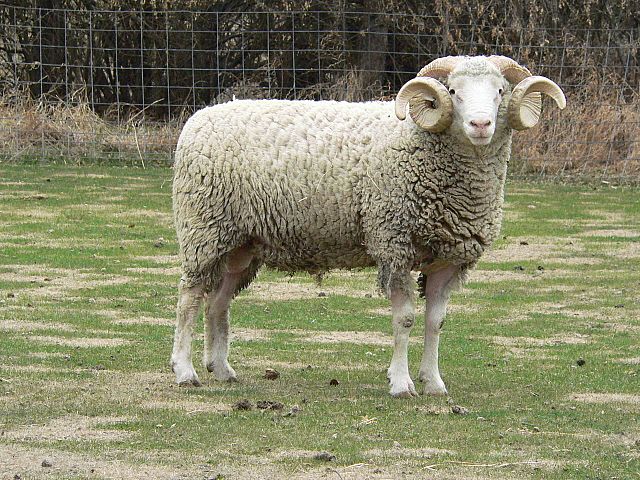
Ewe
Management: At their first joining ewes generally release fewer eggs, have shorter and less intense heat periods, and are less likely to seek out the ram and less inclined to mate. This can prolong joining. Because of their lower sex drive young maiden ewes may not compete well with older ewes for a ram’s service, so they should be joined:
• As a separate flock.
•With smaller, physically sound, fertile, experienced rams at increased ram percentages; this should allow more ewes to be mated sooner, so that they will lamb earlier and have more time to recover before their second joining.
•In fairly small paddocks where there can be close contact between ewes and rams; a flat, open paddock is better than a hilly, scrubby one, and watering points should be central and easily accessible.
These measures will increase contact between ewes and rams and minimise the negative effects of joining maiden ewes at an early age. You can extend the young ewes’ joining period by starting them two weeks earlier than the other ewes, but don’t extend their mating beyond the main ewe joining. If maiden ewes are joined late they will not have enough time after weaning to recover for the second joining.
Summary
• Joining at 7–9 months can give satisfactory lambing performance. This is an area of considerable and unexploited potential for sheep breeding. However, unless management and nutrition are suitably modified, joining at this age is not recommended.
• The importance of nutrition cannot be overemphasised in getting ewe replacements to suitable liveweights for joining at the chosen age.
• Although maiden ewes are normally the least successful reproductive group in the flock, this can be largely overcome by suitable nutrition.
• Growth checks can be eliminated by good nutrition.